The Many Selves I’m Living
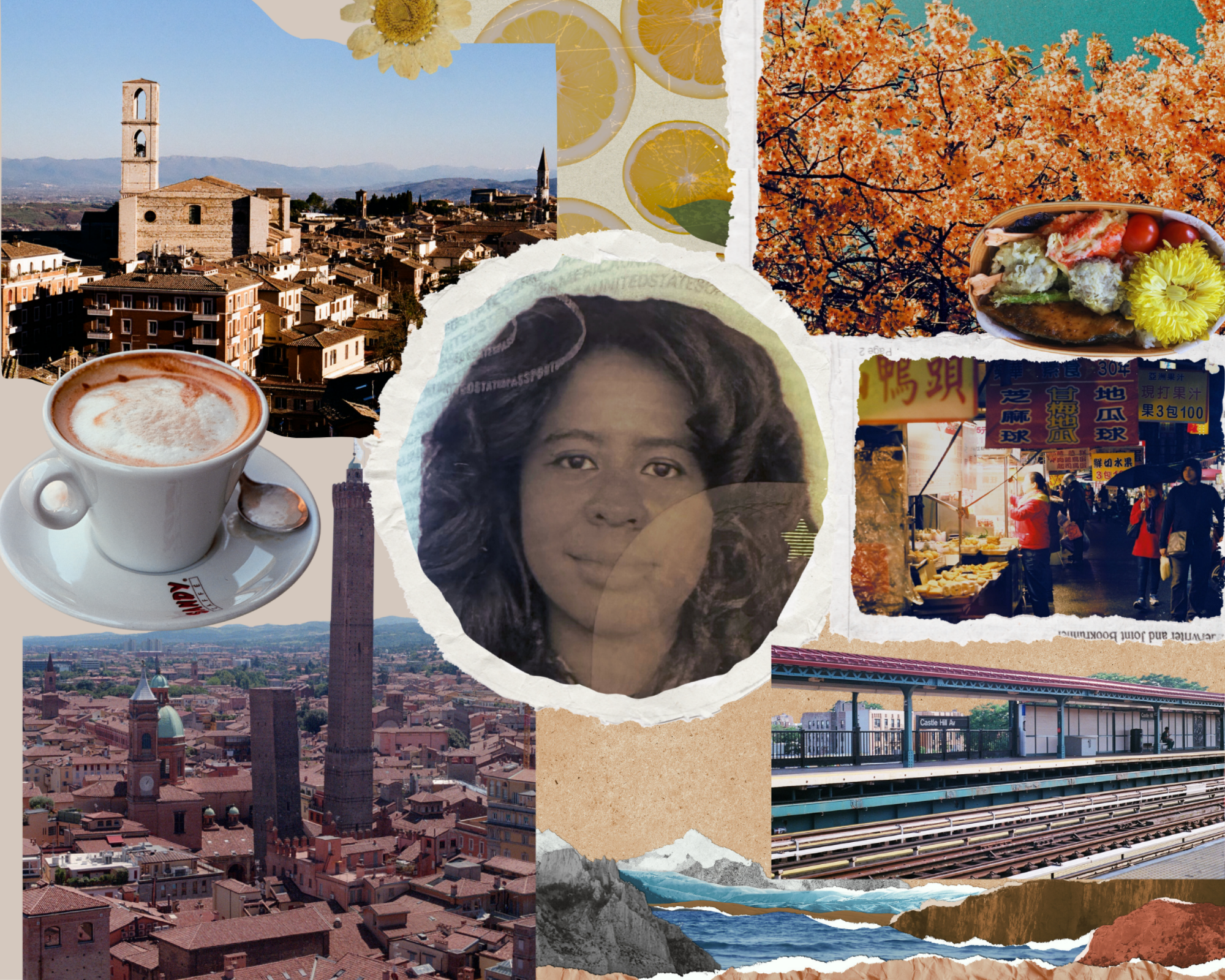
I’ve lived outside the U.S. for almost eight years now. This image holds some of the places—and versions of myself—I’ve carried along the way.
Is it in my veins to uplift my life from where I grew up? Both my grandmothers (now in heaven) did. From Manila to New York City, from Arkansas to Las Vegas. How did they feel? I will never know. But they were tough as nails. My early memories of my Black grandmother are of her smoking in a wheelchair. I never beat my Filipina grandmother at an arm wrestle or a thumb war, even in her seventies. My own mother, a military veteran, was stationed in Korea and at one point raised my sister in rural Oklahoma. Our journeys are far from comparable, but the echo is the same: they uprooted their lives to foreign places. What can I say? I come from a line of brave women.
When I first studied abroad in my early twenties, I felt something quietly fracture. Home didn’t necessarily belong to me in the same way anymore. I was physically elsewhere, but emotionally suspended—untethered. Disorienting, and also a great sadness of being neither here nor there. It’s said that the worst loneliness is being physically surrounded by people yet feeling alone. And sure, not in the misunderstood teen angst way, but in a quieter, heavier sense of acceptance.
Now, years later, I mourn in a different way—not in terms of culture, but in terms of time. Whenever I come home to family or friends, or when they visit me, I realize we’re often resuming conversations where we left off months or even years ago. At first, I thought they were stuck in the past, but really, we are. This experience isn’t unique to me; many immigrants and expats echo the same sentiment. It should feel nostalgic, yet instead it becomes estrangement. I’ve noticed that seeing myself code-switch can be jarring to others. I hear versions of she’s changed. I think about the vulnerability of it all: everyone receives an abridged version of me, and some are only now realizing that. It’s either accepted or deemed insufficient, too surface-level. Meeting people where they are—or where I think they are—has become my strategy. My friends in America couldn’t fully contextualize my life in Italy, just as my friends in Italy couldn’t understand my life in Japan. I exist as an outsider, perpetually unseen. Who gets the most honest version of me? And does it even matter? Shouldn’t context be enough?
Yet the power to reinvent oneself abroad is hard to dismiss. Adaptation, after all, is not inherently negative. Multiplicity is mathematically a form of expansion. I’ve reinvented myself many times. It reminds me how elastic identity can be. I remember a friend once remarking how interesting it was to see the “Italian” version of me compared to the “Japan” version—and wondering what the “American” one looked like. I wondered too. Even if it’s difficult to articulate, I feel the differences: in the words I choose, the clothes I wear, the tone I take. In classic messy-twenties fashion, I’ve worn many hats—English teacher in Japan, master’s student in Italy, deep-tech worker in rural Italy. Through all of these versions, I’ve learned how to move across different spaces. Outside of work, I’ve been a bento hobbyist and, more recently, a beginner golfer, listening to old Perugian men speak in dialect.
Even my Blackness and Filipinoness have shifted across diasporic contexts. Kabayan, but not quite—I’m too Americanized and don’t speak Tagalog. Among African communities, I’m often asked about my origins. Lately, I’ve been questioning how far identity can stretch, and how much of it is shaped by migration. Through my work on Filipino migration in Italy, I reflected on how often migrant women are reduced to their labor, when in reality they are far more than the roles assigned to them. In a Black body, that reduction is compounded—identity filtered through usefulness, through labor, through expectation. I’ve come to realize that my identity extends far beyond race or nationality alone. It is layered, fluid, and constantly renegotiated.
Adaptability does not erase me. In the same way a child turns a Lego house into a spaceship, I’ve reused the same pieces to build something new. The structure changes, but the foundation remains. I am still myself—just multiplied.